
Rotations · Escalation · Equity
On-call scheduling software that answers the 2am question
On-call scheduling software builds and publishes the rotation that says who is covering right now, and what happens if they do not answer. It manages first, second and backup call, tracks the fair distribution of nights, weekends and holidays, and gives anyone who needs to know a way to find out without a login.
From $99/month per location · No sales call · No card to start
At a glance
- On-call scheduling software publishes who is covering right now, and defines what happens if they do not answer.
- It manages first, second and backup call, and publishes the whole chain in order, so escalation is a glance rather than a search.
- A public who's-on-call board answers the 2am question without an account, an app, or a call to the switchboard.
- Equity tracking counts nights, weekends, holidays and call per person, and shows the count to the people carrying them.
- $99–$249 per location per month, published, with a 14-day trial and no card required.
How do I publish who is on call?
The board that answers the pager question. Someone needs the on-call physician at two in the morning; they are not going to install an app, and they are not going to ask you for a password.
MedAligna publishes a who's-on-call board on a revocable public link: who is covering right now, who is second, who is backup, and how to reach them. No account, no app, no phoning the switchboard. That single page is the reason a piece of software built in the pager era still gets a thousand searches a month: the need never went away, and most modern tools forgot to serve it.
The link is a token you can rotate or revoke at any time, so it is shareable without being permanent, and it never appears in a search engine.
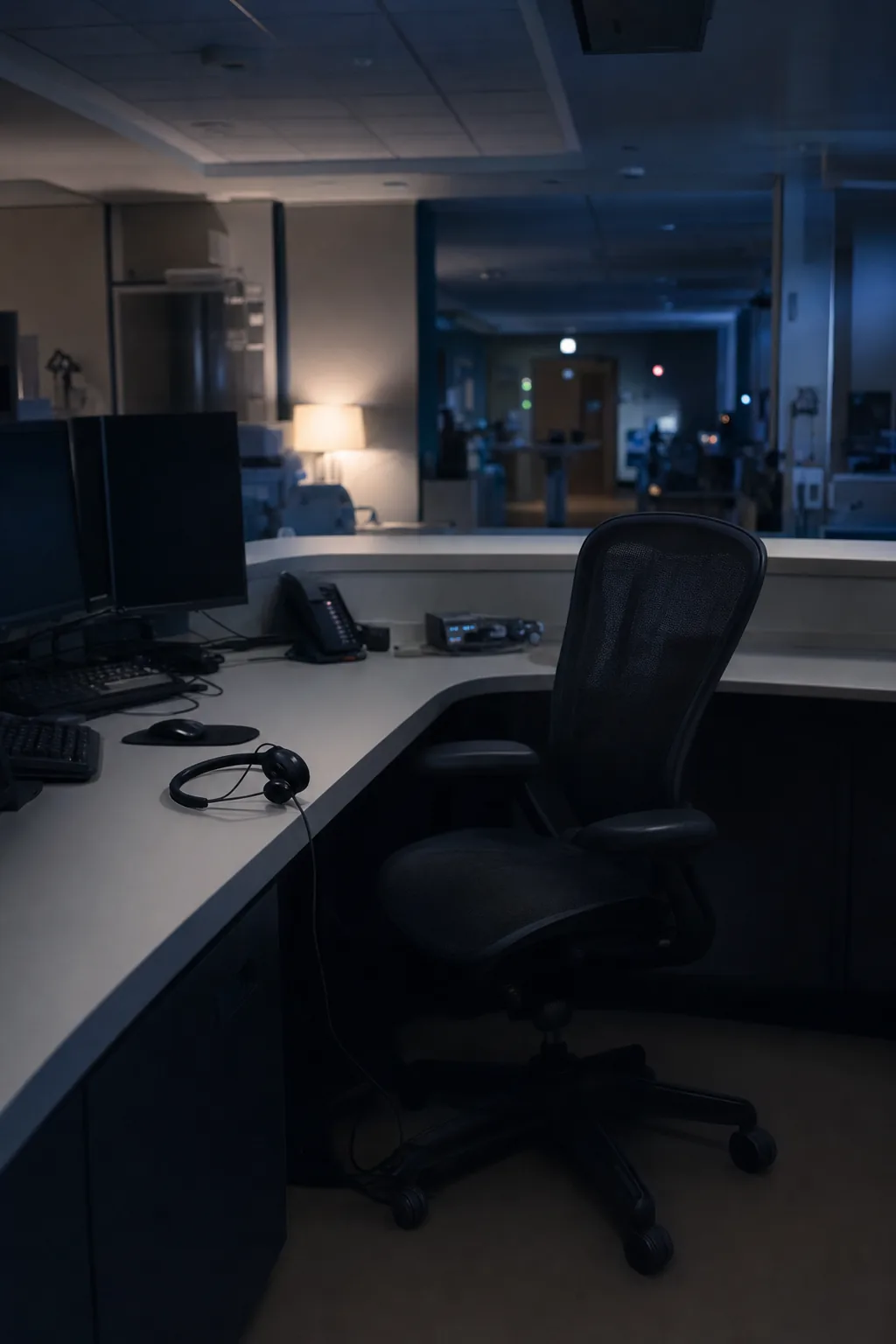
What happens when the first person does not answer?
Escalation is a chain, not a name. A rotation that names one person is a rotation with a single point of failure, and everybody discovers that on the night it matters.
The chain is there before anyone needs to start it. First call, second call, backup: each rotation carries its own escalation order, and the public board shows the whole chain in that order. When the first name does not answer, the caller is already looking at the second, which beats any paging workflow that begins with finding the right phone list.
And the chain acts on its own. An activated page that goes unacknowledged escalates automatically: a push notification to the first person, a five-minute window, then the next tier — every step recorded with its timestamp, and an acknowledgement anywhere stops the chain for good. Push reaches a phone with MedAligna installed to it (on iPhone that means added to the home screen, an Apple rule not ours); we do not send SMS or place calls.
And because the board is a revocable link rather than an app, it works for the person actually placing the 2am call: a ward clerk, an answering service, a partner practice. Nobody needs an account to find the next name.

How is on-call equity tracked?
Equity, so the rota stops being an argument. Nobody minds carrying their share; what people mind is a rota where nobody can prove what their share was.
MedAligna counts on-call blocks, nights, weekends and holidays per person over any trailing window, and shows the count to the people carrying them, not only to the scheduler. Holiday memory is explicit: it knows who worked the last Christmas, so the next one is assigned against a record instead of a recollection.
When someone says they always get the bad weekends, the answer is a number rather than a conversation.
Which nights does an on-call system actually change?
First call does not pick up
The on-call physician's phone is on silent. In most departments the caller now goes hunting: who is second call, and is the list taped to the desk even current?
The board publishes the chain, not just the name: first, second and backup in order, always the current version. The caller tries the next name from the page they are already on.
The list on the wall is stale
The rota changed at four o'clock: a swap moved second call. The printed list at the ward desk, and the copy the answering service keeps, both still show yesterday's chain.
The board is a link, not a printout, so there is exactly one copy and it is always the published truth. Rotate or revoke the token and every old bookmark stops working at once.
'I always get the bad weekends'
It is said in every department, and it is sometimes true. Nobody has the numbers, so it is settled by whoever is most persuasive.
A count per person, over any trailing window, visible to the people carrying the calls. The conversation becomes a number.
How to choose on-call scheduling software
Eight questions worth asking any vendor in this category, including us. At least one of them is a question we do not answer well, and we have said so rather than leaving it out.
01Can someone check who is on call without logging in?
This is the whole job. If the answer requires an account, the answer will be obtained by phoning somebody instead, and your software has been routed around.
Where MedAligna lands: A revocable public link, no account, never indexed. Rotate or revoke the token at any time.
02What happens if the first person does not answer?
A rotation that names one person is a single point of failure, and you find out on the night it matters.
Where MedAligna lands: First, second and backup call, published in order on the board: the caller tries the next name from the page they are already looking at. Nothing about the chain lives in anybody's memory.
03Does it page people automatically: push, SMS, phone?
Push notifications are unreliable in ways that are invisible until they fail, particularly on iOS, where they require the app to have been installed to the home screen. SMS is the usual fallback, and some tools sell the whole chain as automation.
Where MedAligna lands: Push, yes. An unacknowledged page escalates automatically — push to the first call, a timed window, then the next tier — with every step recorded and an acknowledgement stopping the chain for good. The published board stays underneath it all, because the caller's side needs nothing installed. What we do not send is SMS or voice calls, and push on an iPhone requires the app added to the home screen — if text paging is a hard requirement, we are not your tool yet, and we would rather you knew before the trial than after.
04Is equity tracked, and by whom can it be seen?
An equity report only ends the argument if the people arguing can see it.
Where MedAligna lands: Counts of nights, weekends, holidays and call blocks per person, over any window, visible to the staff carrying them.
05Does it integrate with your paging or alerting system?
Some hospitals run dedicated clinical alerting platforms, and duplicating the escalation logic in two systems is a recipe for a missed page.
Where MedAligna lands: We send our own push pages (see above) but we do not integrate with clinical paging platforms: on the caller's side, the published board is the answer. Enterprise gets webhooks, so schedule and on-call changes can be forwarded into whatever alerting you already run. If deep paging integration is a hard requirement, say so and we will tell you honestly whether we fit.
What is an escalation window, an acknowledgement, or backup call?
- First / second / backup call
- The escalation order for a rotation. First call is contacted initially; second and backup are the ordered fallbacks when there is no response.
- Escalation window
- How long an unacknowledged notification waits before the next channel or the next person is tried. Too long and the page is missed; too short and everyone is woken.
- Acknowledgement
- An explicit confirmation that the on-call person has received the request. Delivery is not acknowledgement: a message that arrives on a silent phone has been delivered and has not been seen.
- On-call equity
- The fair distribution of call across a team, counted over a trailing window. Needs to include holidays and weekends separately, because those are the ones people actually resent.
- Public on-call board
- A login-free page showing current coverage, for the people who need to know and do not have accounts: switchboard, other departments, referring physicians.
Questions people actually ask
- What is on-call scheduling software?
- On-call scheduling software, often just called an on-call scheduler, builds the rotation of who is covering outside normal hours, manages first, second and backup call, escalates when someone does not respond, tracks the fair distribution of nights, weekends and holidays, and publishes the current on-call to whoever needs it.
- Can people see who is on call without logging in?
- Yes. A revocable public board shows who is on call right now, who is second and who is backup, on a link that needs no account and never gets indexed by search engines. You can rotate or revoke the token at any time.
- What happens if the on-call person does not respond?
- The escalation order is published beside the current name: the board shows first call, second call and backup in order, so the caller tries the next name without hunting for a phone list. The chain is data rather than memory, and it is the same answer for everyone who looks.
- Does it track on-call equity?
- Yes: on-call blocks, nights, weekends and holidays per person over any trailing window, including who worked the last occurrence of each holiday. The report is visible to the people carrying the calls, which is what makes it credible.
- Do on-call hours feed payroll, and how are they counted?
- Call blocks and any shift worked from them are captured as hours and exported as a timesheet your payroll system imports; MedAligna is not a payroll processor and never calculates net pay, withholds tax or moves money. What it does guarantee is that the hours are the real elapsed ones. A 19:00–07:00 night is computed on instants rather than by subtracting one wall clock from another, so it is eleven hours the night the clocks go forward and thirteen the night they go back — the two nights a year where a system that prints twelve every time shorts somebody an hour they were on the floor. Whether being on call is itself compensable is an FLSA question about how restricted the person is, and that is your counsel's call rather than the software's.
- Who sets the rotation up, and what does on-call scheduling software cost?
- You set it up, in an afternoon, and it costs $99, $149 or $249 per month per location, published, with a 14-day trial and no card. Import your people from a CSV, define the rotation and its escalation order, and share the board's link. There is no implementation project and no sales call, so the first rota is built by the person who understands the rota. On-call rotations and the public board are on every tier.
- What is on-call scheduling, and how is it different from shift scheduling?
- On-call scheduling is the rota for coverage outside the shifts on the grid: who answers first, who is second, who is backup, and for which hours. A shift puts somebody on the floor; a call block puts somebody reachable, with an obligation to come in or respond. The two live on the same schedule here because the rules cross over: a call block that ends at 07:00 still counts against the minimum rest before an 08:00 shift, and a rest violation is the same red pill whether the hours were on the floor or on the phone.
- Is this a physician on-call scheduling tool or a general on-call scheduling tool?
- Both, on one schedule. Physician groups use it for first, second and backup call with the equity report across nights, weekends and holidays; nursing units and clinics use it for the after-hours line and the on-call nurse; small agencies use it for the manager who carries the phone. The engine does not care about the job title, only about the block's hours, the rest they consume, and whose turn it fairly is. The one thing it is not is a DevOps pager: no incident alerting, no integration with a monitoring stack.
Related
Stop being the person who knows
A public on-call board, an escalation chain that actually escalates, and equity everyone can check. Fourteen days free.